Residential Concrete Flatwork
in Middle Tennessee
Flat horizontal concrete for Tennessee homes. Patios, pool decks, walkways, porches, and sidewalks finished with broom, stamped pattern, exposed aggregate, integral color, or smooth-troweled surfaces. The finish is the feature.
Tell Us About Your SiteFlatwork Where the Finish Is the Feature
Concrete flatwork is exactly what it sounds like: flat, horizontal concrete surfaces. Patios. Pool decks. Walkways. Sidewalks. Porches. Slabs you walk on, sit on, and live on every day. What separates great flatwork from average flatwork is the finishing, the texture, color, joint pattern, and sealer that you actually see and touch. The structural concrete underneath matters, but on a residential flatwork project, the surface is the project. S and S Excavation and Hauling pours and finishes residential flatwork for homeowners across Manchester, Tullahoma, Bell Buckle, and the surrounding region.
Residential flatwork covers a wider range of finishes than most homeowners realize. The standard broom finish, the slightly textured surface you see on most driveways and sidewalks, is one option, and it is the most common because it is durable, slip-resistant, and inexpensive. But the same slab can be finished with a stamped pattern that mimics flagstone, slate, brick, or wood plank. It can be tinted with integral color mixed into the concrete or stained after the pour. The aggregate can be exposed by washing the surface paste away, leaving the river rock or limestone visible. Each finish has its own look, its own maintenance schedule, and its own price point.
Where most flatwork projects fail is not in the visible surface but in the joints, the slope, and the base preparation. Random cracking happens when control joints are missing or poorly placed. Standing water happens when slope was not set away from the house. Settlement happens when the base was not compacted properly. We approach flatwork as an integrated project: the dig, the base, the forms, the pour, and the finish all matter, and the visible finish only looks great long-term if the invisible work underneath is done right.
Flatwork Projects and Finishes
Patios and Outdoor Living Slabs
Concrete patios sized to your furniture and entertaining plans. Standard broom finish for daily use, or upgraded finishes including stamped patterns, exposed aggregate, or integral color where you want the patio to be a design feature rather than just a slab. Slope is set away from the house, joints are placed for crack control, and edges are finished crisply.
Pool Decks
Concrete decks around in-ground pools with non-slip finishes for safety, light colors to keep the surface cool underfoot, and proper slope away from the pool to keep splash-out water moving toward the drain. Stamped or textured finishes can mimic stone or tile while staying within a flatwork budget.
Walkways and Garden Paths
Concrete walkways from driveway to door, around the side yard, or through garden areas. Standard widths from 36 to 60 inches, with curves where the design calls for them. Decorative options include scored patterns, exposed aggregate panels alternating with broom strips, or stamped flagstone runs.
Porches, Stoops, and Landings
Concrete front porches, back porches, side stoops, and entry landings. Surface finishes coordinate with the patio or walkway, slope is set for drainage, and the porch surface ties into the existing house elevation cleanly. Integral color or stain can match the house exterior or stand out as an accent.
Decorative Finishes
Stamped concrete in flagstone, slate, brick, cobblestone, or wood plank patterns. Exposed aggregate using river rock or local limestone. Integral color mixed into the concrete or color hardener applied to the surface. Acid stains and dyes for variegated tones. Each finish is selected to fit the look you want and the maintenance you are willing to do.
Sealing and Maintenance
Decorative finishes need a sealer to keep their color and protect against staining and freeze damage. We apply the initial sealer at the end of the cure period and recommend a reseal schedule every two to three years. Standard broom finishes do not require sealing but benefit from it. Coordinated with your grading and drainage so water management is part of the design from the start.
Our Flatwork Process
Design Walkthrough
We walk the site with you, talk through the layout, discuss finish options, and look at samples. You leave the conversation with a clear picture of what your slab will look like, how big it will be, and what the price covers from start to finish.
Excavation and Base
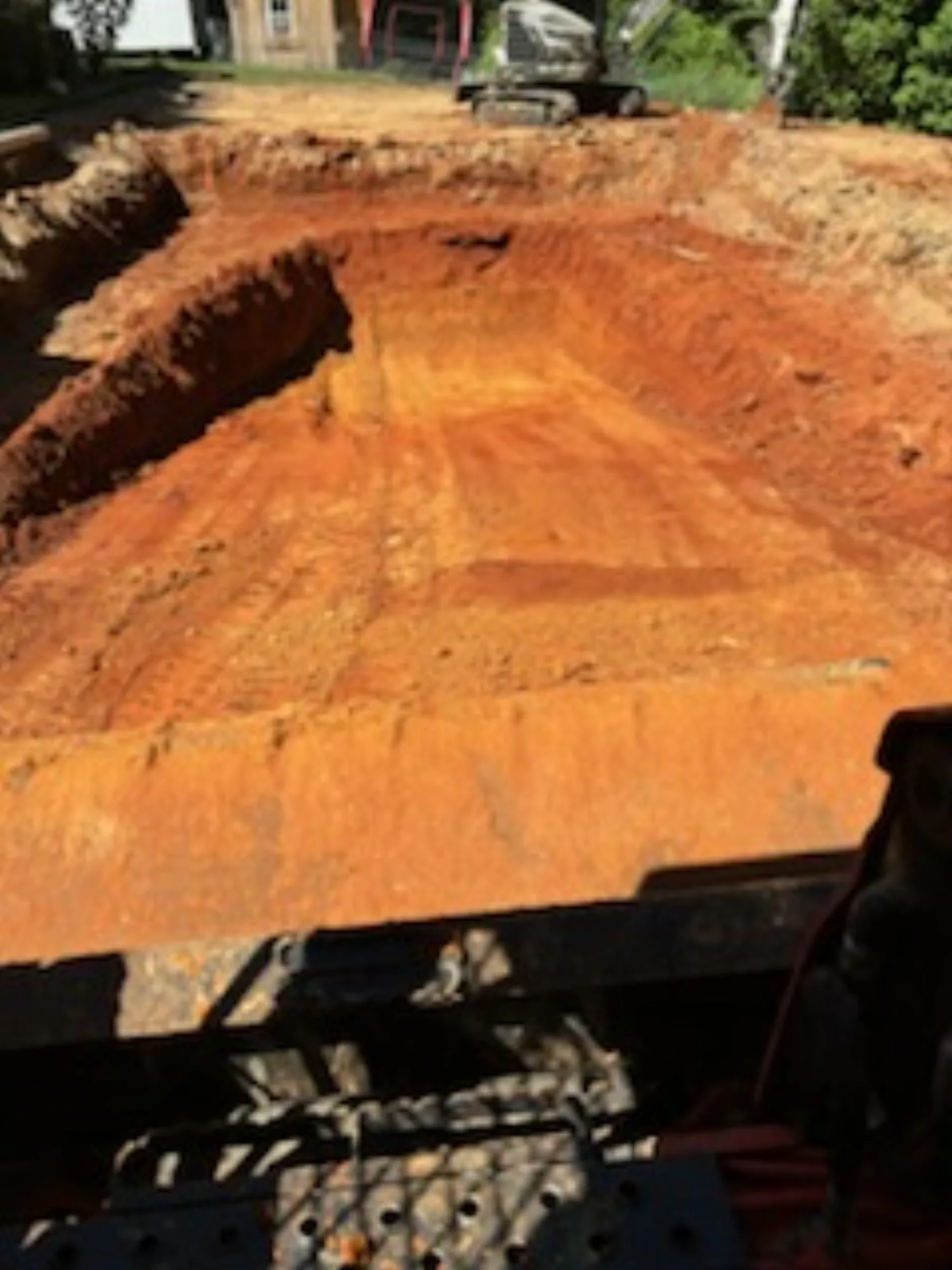
We excavate to depth, install and compact aggregate base, and verify the base is level, firm, and at the correct elevation for the finished slab to sit at the right grade against the house, the deck, or the existing hardscape.
Forms, Pour, Finish
Forms are set, reinforcement is placed, concrete is poured, and the chosen finish is applied while the concrete is at the right consistency. Stamping happens within a tight window. Color hardener gets broadcast and worked in. Exposed aggregate gets washed at the right time. Timing is the difference between a great finish and a salvage job.
Cure, Joint, Seal
Curing compound or wet cure is applied to lock in moisture for proper strength. Saw-cut joints are placed at the design pattern within 12 to 24 hours. After the initial cure, decorative finishes get sealed. We walk the finished work with you and explain the maintenance schedule for the finish you chose.
Flatwork Projects



Why Choose S and S for Flatwork
Finish Window Discipline
Stamped patterns, color hardeners, and exposed aggregate all live or die in a finishing window measured in minutes. Our crews work the slab on a timed sequence so the finish goes on at the right consistency, not too early and not too late.
Subgrade and Slope Done Right
The visible finish is what you see, but the subgrade is what determines whether the slab settles, cracks, or holds water. We treat the dig and the base prep as the project, not as something to rush so we can get to the pour.
Joint Layout That Looks Intentional
Saw-cut joints are required for crack control, but they can be placed in patterns that look like part of the design, quartering a square patio, framing a fire pit, or following the lines of a stamped pattern. Joint layout is part of the design conversation, not an afterthought.
Honest About Decorative Finishes
Stamped and stained concrete look incredible the day they are finished. They also need maintenance, resealing every two to three years, refresh of color stain on UV-exposed surfaces. We tell you the maintenance reality up front so you can choose a finish that matches what you actually want to maintain.
One Crew, Earth to Finish
The same crew excavates, places base, forms, pours, and finishes. No handoff between an earthwork sub and a finishing crew. The finisher knows exactly what is under the slab because the same crew put it there, which makes troubleshooting fast if anything comes up.
Veteran-Owned, Owner-Operated
The person who quotes your project is the person who shows up to look at it and the person you can call when you have a question after the pour. Ten years in business, the same name on every job. You know who you are dealing with.
Flatwork FAQs
What is the difference between flatwork and a regular slab pour?
Flatwork is the broad term for any flat horizontal concrete surface, patios, walkways, pool decks, sidewalks, porches. The structural concrete is the same as any other slab, but the focus is on the finish, the joint layout, the slope, and the surface treatment because those are what you see and use every day. A regular slab pour might be a footing or a hidden subbase; flatwork is the visible, walked-on surface.
What finish should I pick for my patio?
For most residential patios, a broom finish is the durable, low-maintenance default. Stamped concrete looks like flagstone or slate at a fraction of the natural stone cost but requires sealing every two to three years. Exposed aggregate gives a natural-stone look without the maintenance of stamping. Smooth-troweled finishes are slip-prone outdoors and are not recommended for patios. We bring samples to the design walk so you can see and feel each option.
How do I keep my pool deck cool?
Light-colored concrete reflects heat. Integral color or surface stain in cream, beige, or gray-light tones keeps a pool deck noticeably cooler than dark gray standard concrete. Texture also matters: broom or stamped surfaces feel cooler underfoot than smooth-troweled surfaces because the texture exposes more surface area to airflow. Call (931) 636-7713 to discuss pool deck options.
How long do decorative finishes last?
The concrete itself lasts as long as any other concrete, decades. The decorative surface treatment depends on maintenance. Sealed stamped or colored concrete stays vibrant for two to three years per seal cycle. Exposed aggregate is essentially maintenance-free aside from occasional pressure washing. Acid stains can fade in direct UV after several years and can be refreshed with a stain reapplication. We provide a maintenance plan with every decorative project.
Can I add a new patio onto an existing slab?
Yes, with a few cautions. The new pour needs a clean expansion joint where it meets the existing concrete, and the elevation needs to match or step intentionally. Tying new concrete directly to old without a joint usually leads to cracking at the connection because the two slabs move at different rates. We address all of this in the design walk so the addition reads as intentional rather than tacked-on.
How do I prevent cracks in my new flatwork?
Concrete cracks because it shrinks during curing and moves with seasonal temperature changes. Properly placed saw-cut control joints concentrate that movement at the joints, where the cracks are nearly invisible. Reinforcement (rebar or fiber) reduces crack widths if cracking does occur. Proper subgrade preparation prevents settlement cracks. Together, these three factors are the difference between a slab that looks new for decades and one that develops random cracks within the first few years.
Ready to Plan Your Flatwork
From broom-finish patios to stamped pool decks and exposed-aggregate walkways, S and S Excavation handles residential flatwork across Middle Tennessee. Honest finish recommendations. Joint layout that looks intentional. Subgrade done right.