Retaining Wall Construction
in Middle Tennessee
Engineered retaining walls in concrete block, segmental, natural stone, and timber. Erosion control, slope management, landscape definition.
Tell Us About Your SiteWalls That Hold for Decades
Retaining walls solve real engineering problems: managing slopes, preventing erosion, creating usable level space on uneven properties, and protecting structures from water and soil pressure. They also add visual definition and lasting value to landscapes. Done right, a retaining wall lasts 50 plus years and quietly does its job through every freeze, thaw, and storm. Done wrong, it leans, fails, and damages everything downhill within 5 to 10 years. S and S Excavation and Hauling builds engineered retaining walls across Manchester, Tullahoma, Shelbyville, and the surrounding Middle Tennessee region.
Our retaining wall capability covers segmental concrete blocks (Allan Block, Versa-Lok, Keystone), natural Tennessee fieldstone, concrete masonry units (CMU) with stone or brick veneer, poured concrete, treated timber, and gabion baskets. We size walls correctly, prepare bases properly, install drainage behind every wall to handle hydrostatic pressure, and integrate geogrid reinforcement for taller walls. The walls we build are designed to outlast the property owners who commissioned them.
Most retaining wall failures we are called to fix were not built by qualified crews. They were built by landscape labor without engineering input, set on poor base material, with no drainage behind the wall and no geogrid reinforcement. Hydrostatic pressure builds up after the first wet season, the wall starts to lean, and within a few years the lean turns into a collapse. Our process eliminates every one of those failure modes during the install rather than discovering them after the wall fails.
Retaining Wall Material Options
Segmental Concrete Blocks
The standard for residential retaining walls. Engineered block systems (Allan Block, Versa-Lok, Keystone) with built-in setback and interlock. Up to 4 to 6 feet tall without engineering, taller with engineered design. Pricing runs $20 to $40 per face square foot installed. The system most homeowners see when shopping for retaining wall work.
Natural Stone Walls
Tennessee fieldstone delivers the highest aesthetic, dry-stacked or mortar-set depending on application and budget. Premium pricing at $35 to $75 per face square foot installed. Long lifespan, often 75 plus years. The walls that look like they belong on the property because the stone is local rather than trucked in from elsewhere.
CMU with Stone Veneer
Structural concrete masonry block with stone or brick veneer, combining the structural capacity of CMU with the aesthetic of natural materials. Pricing runs $30 to $60 per face square foot. A practical option for taller walls where the budget will not stretch to full natural stone but appearance still matters.
Poured Concrete
Highest structural capacity, used for tall walls and engineered applications where loads exceed what segmental block can handle. Pricing runs $25 to $50 per face square foot for standard finish. Often the right answer for commercial sites and tall residential walls supporting significant slope or surcharge load.
Timber Walls
The budget option, with a 15 to 25 year lifespan. Less popular than 20 years ago because the long-term cost is higher than segmental block once replacement is factored in. Pricing runs $12 to $22 per face square foot. Suitable for short landscape walls and low-budget applications where eventual replacement is acceptable.
Gabion Baskets
Wire baskets filled with stone deliver a modern industrial aesthetic, excellent natural drainage, and growing popularity for both residential and commercial applications. Pricing runs $25 to $50 per face square foot. Tied directly to our excavation and material-handling capability so the basket fill goes in as efficiently as possible.
Our Retaining Wall Process
Site Assessment
We walk the slope, measure heights, evaluate soil and surcharge loads, and decide whether the wall needs an engineering stamp. Walls over 4 feet typically require structural engineer review under TN code (some counties require it over 3 feet). We coordinate engineering as part of the project scope.
Excavation and Base Prep
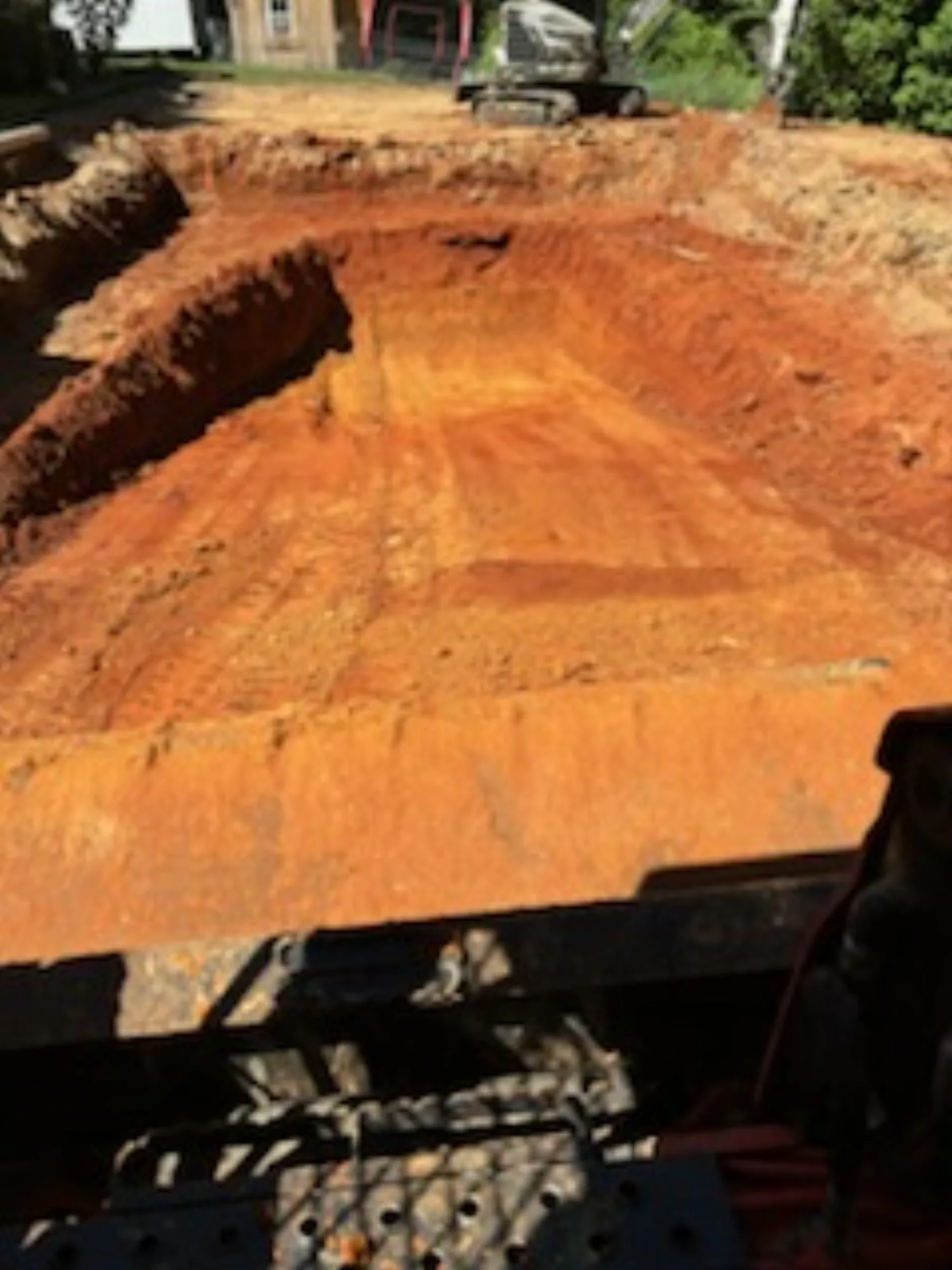
We excavate the wall footprint to design depth, install and compact aggregate base, and verify the base is level and properly sized for the wall. Base preparation is the foundation for everything that follows, and short-cutting it guarantees a wall that leans within a few seasons.
Wall Construction
Block, stone, or concrete is placed course by course with proper setback per manufacturer spec. Geogrid reinforcement is installed at specified intervals for taller walls. Drainage rock and perforated pipe go in behind the wall as it rises so the system handles water from day one.
Cap, Backfill, Walk-Through
Cap units or capstones are set, backfill is placed and compacted in lifts, surface is restored, and we walk the finished wall with you to confirm everything is square, plumb, and draining correctly. Photos document the drainage and reinforcement that go invisible once the wall is finished.
Retaining Wall Projects



Why Choose S and S for Retaining Walls
Engineered Designs
Walls over 4 feet get a structural engineer stamp per Tennessee code. We coordinate with structural engineers as part of the project scope so the wall is designed for the actual loads it will see, not projected by trial and error. Engineering is built into the budget rather than skipped to lower the quote.
Quality Block Systems
Allan Block, Versa-Lok, and Keystone are the engineered systems with proper interlock and published structural specifications. We do not substitute generic blocks that look similar but lack the published engineering data, because the specifications are what make the wall predictable in performance.
Drainage Integration
Drainage rock plus filter fabric plus perforated pipe goes behind every wall we build. Hydrostatic pressure is the number one cause of retaining wall failure, and proper drainage handles the water before it can lean the wall. The drainage is the cheap part of a retaining wall, and skipping it kills walls early.
Geogrid Reinforcement
Engineered fabric layers extending into the slope behind segmental walls are required for tall walls under code. Geogrid creates the reinforced soil mass that resists overturning. We install geogrid per engineered specifications, not as an optional upcharge or a corner-cutting target.
Natural Stone Capability
Tennessee fieldstone for premium aesthetic, dry-stacked or mortar-set per the application. Sourcing local stone and matching it to the property keeps walls looking like they belong. Our crews have built natural stone walls across the region and know how to lay stone for both structure and appearance.
Permits and Engineering
Manchester and surrounding county permits are pulled as part of our scope. Structural engineering coordination is included where required by code. You do not need to hire a separate engineer or pull permits yourself, we handle the regulatory side of the project so you can focus on the design.
Retaining Wall FAQs
How much does a retaining wall cost in Middle TN?
Small landscape walls under 3 feet (20 to 40 face square feet) run $1,200 to $3,500. Standard 3 to 5 foot walls (80 to 150 face square feet) run $3,500 to $9,500. Engineered 5 to 8 foot walls (200 to 400 face square feet) run $8,500 to $25,000. Large walls over 8 feet are custom-quoted with engineering. Natural stone carries a 30 to 60 percent premium. Call (931) 636-7713 for a free site walk.
Do I need an engineer for a retaining wall?
Tennessee building code requires a structural engineer stamp on retaining walls over 4 feet (some counties require it over 3 feet). We coordinate with structural engineers as part of the project scope, including the geotechnical input the engineer needs to size the wall properly for site conditions. Engineering cost is included in the project budget when required.
Why do retaining walls fail?
Five reasons account for almost every retaining wall failure: hydrostatic pressure (no drainage behind the wall), inadequate base preparation, undersized footing, no geogrid reinforcement, and improper setback per course. We address all five during install, which is why our walls last decades while cheaper installs lean within a few years.
How long do retaining walls last?
Quality engineered segmental block walls last 50 plus years. Natural stone walls last 75 plus years. CMU with veneer lasts 50 plus years. Timber walls last 15 to 25 years and are typically replaced rather than maintained. Drainage and base preparation determine actual longevity more than the surface material does.
Can you build curved retaining walls?
Yes, segmental block systems are designed to accommodate curves naturally. Natural stone and CMU walls can also follow curves with appropriate detailing. Curved walls cost slightly more than straight runs because of the additional cutting and fitting work, but the visual impact is usually worth the difference.
How long does retaining wall install take?
Small landscape walls run 1 to 3 days. Standard 3 to 5 foot walls run 3 to 7 days. Engineered 5 to 8 foot walls run 7 to 14 days plus engineering review time. Larger or more complex walls run longer, and we provide a project schedule with the quote so you know what to expect throughout the build.
Need a Retaining Wall
From short landscape walls to engineered slope retention, S and S Excavation builds retaining walls that hold across Middle Tennessee. Engineered design. Proper drainage. Built to outlast the property.