Culvert Installation
in Middle Tennessee
Driveway culverts, road culverts, and stream-crossing culverts for rural Middle Tennessee properties. Install, replace, and clean.
Tell Us About Your SiteCulverts Sized Right, Installed Right
Rural Middle Tennessee properties almost always involve culverts: driveway culverts crossing roadside ditches, road culverts under private drives, stream and creek crossings on larger properties, and field culverts on agricultural land. When sized correctly and maintained, culverts handle storm runoff for decades. When undersized or clogged, they cause flooding, road washouts, driveway loss, and property damage that can run thousands of dollars per storm event. S and S Excavation and Hauling installs and maintains culverts across Manchester, Tullahoma, Shelbyville, and the surrounding region.
Our culvert capability covers HDPE (high-density polyethylene), CMP (corrugated metal pipe), concrete pipe, box culverts, and arch culverts for stream crossings. We size pipes based on actual drainage area, slope, and rainfall intensity rather than guessing from what fits in the existing trench. We install proper bedding, adequate cover, headwalls at inlets and outlets, and riprap aprons to dissipate water energy and stop downstream erosion. The work is straightforward when done correctly and disastrous when it is not.
The most common Middle Tennessee culvert problem we are called to fix is a culvert that was undersized for the drainage area it serves, then clogged with debris, then washed out during a storm event. The replacement opportunity is usually to upsize the pipe correctly and add proper headwalls so the inlet does not collect debris the same way. Our background in grading and excavation means the bedding, cover, and approach grades all get done as part of the install, not skipped to lower the quote.
Culvert Types and Materials
HDPE Culverts
The modern standard for residential and rural culvert installation. Lightweight, corrosion-proof, with a 50 plus year service life in typical Middle Tennessee conditions. The default choice when budget allows, particularly in acidic soils where metal corrodes faster.
Corrugated Metal Pipe (CMP)
Traditional steel culvert with a 25 to 40 year service life in good drainage conditions. Still appropriate for many applications, particularly when installed budget is the main constraint and soil conditions are favorable to the metal.
Concrete Pipe
The heaviest, longest-lasting culvert material at 75 plus year service life. Used for larger applications and where heavy loading from trucks or equipment is expected. Higher up-front cost than HDPE but the right choice for installations expected to outlive multiple replacement cycles of cheaper pipe.
Box Culverts
Rectangular concrete sections for larger crossings where the drainage area exceeds what round pipe can practically handle. Custom-sized and custom-quoted by application. Often the right answer for stream crossings and driveways on larger drainage basins where a 36 inch round pipe would not handle the design storm flow.
Arch Culverts
Wider-span options for stream crossings that mimic natural channel shape better than round pipe. The flatter bottom maintains stream bed continuity for fish passage and reduces scour at the outlet. Used where environmental permits require natural channel preservation or where round pipe would create a velocity problem.
Culvert Cleaning and Repair
Existing culverts that have clogged with debris, sediment, or beaver activity get cleaned out before the next storm season. Damaged culverts are replaced and often upsized at the same time.
Our Culvert Process
Sizing and Permits
We assess drainage area, slope, and rainfall intensity to size the pipe correctly. Permits from county road departments or TN DOT are pulled where the culvert is in or near right-of-way. Stream crossings may require additional environmental permits, which we coordinate as part of the scope.
Excavation and Bedding
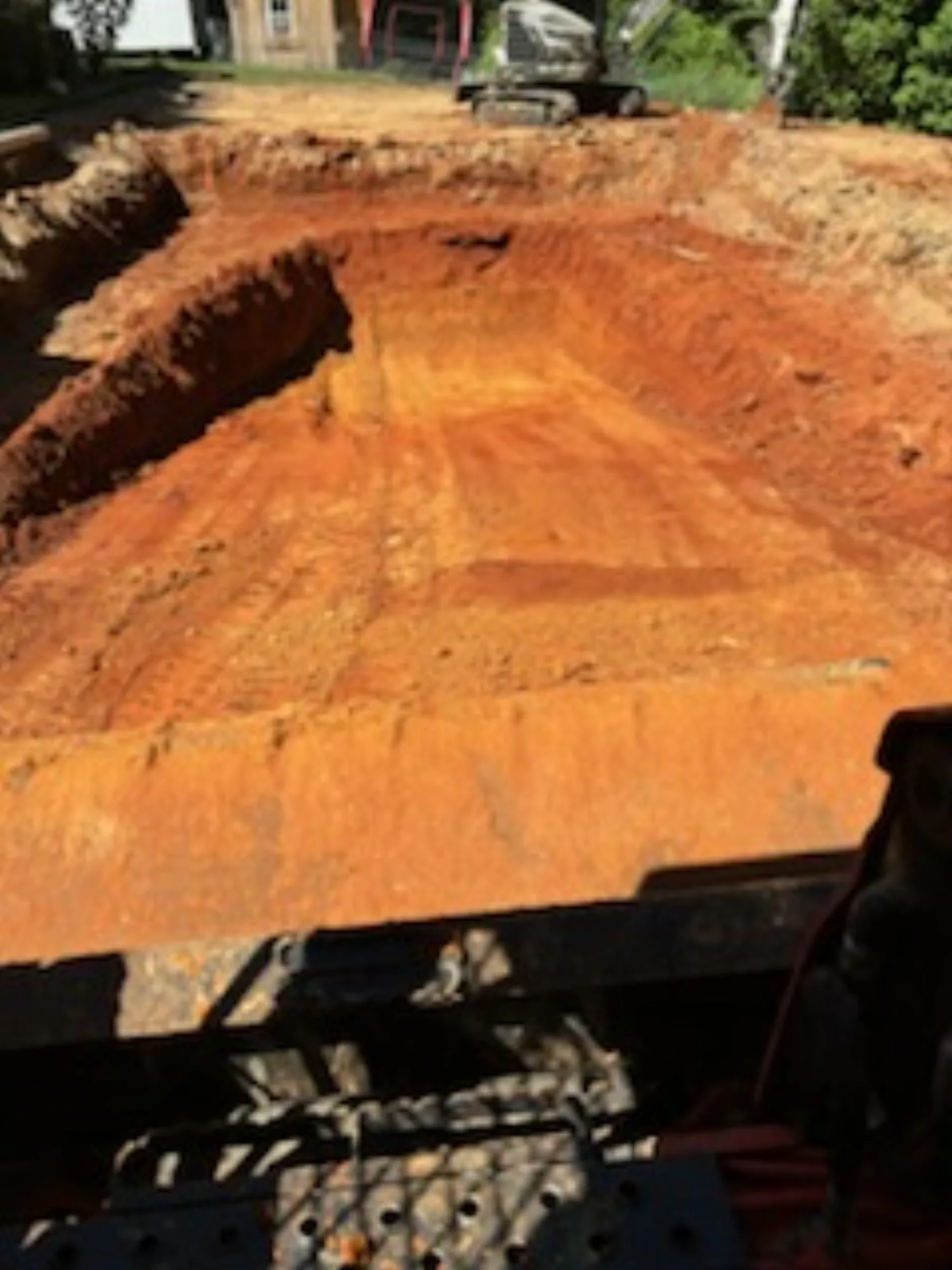
We excavate the trench to design depth and width, place compacted aggregate bedding under the pipe to prevent settling, and verify the bedding is uniform along the entire length. Bedding quality is one of the main differences between a culvert that lasts 40 years and one that sags within a few seasons.
Pipe Placement and Cover
Pipe is placed at correct slope and alignment, joints are sealed, and backfill is placed and compacted in lifts to provide adequate cover (minimum 12 inches typical, more for larger pipes or heavier traffic). The compaction around and over the pipe is what carries the load.
Headwalls and Aprons
Concrete or stone headwalls are installed at inlet and outlet to prevent erosion and stabilize the pipe ends. Riprap aprons at the outlet dissipate water energy and stop downstream erosion. We walk the finished culvert with you and run a water test where practical.
Culvert Installation Projects



Why Choose S and S for Culverts
Properly Sized
Drainage area, slope, and rainfall intensity calculations determine pipe size. We do not guess from what fits in the existing trench, and we do not install undersized pipe to lower the quote. The right size is the one that handles the design storm with margin, not the one that is cheapest on day one.
HDPE, CMP, and Concrete
All major culvert materials in our scope. We match material to application and budget rather than pushing the one we make the highest margin on. HDPE for most residential, CMP where budget rules and soils are favorable, concrete pipe for heavy loads and long service life requirements.
Headwalls and Aprons
Concrete or stone headwalls plus riprap aprons at outlets are standard on our installs, not optional upgrades. Headwalls prevent end erosion and keep debris out of the inlet. Aprons dissipate water energy and stop the downstream erosion that undermines the outlet over time.
Permits Coordinated
County road department permits, TN DOT right-of-way approvals, and environmental permits for stream crossings are all coordinated by us as part of the project scope. You do not chase agencies or research ordinance requirements yourself, that work is included in the project budget.
Cleaning Service
Annual cleaning is recommended for culverts in heavy debris areas, and the cost is trivial compared to dealing with a storm-event washout.
Stream Crossing Specialty
Engineered crossings on larger streams require environmental permits from TVA, the TN Department of Environment, or the US Army Corps of Engineers depending on stream classification. We coordinate the permit work and design the crossing to meet the regulatory requirements without unnecessary cost.
Culvert Installation FAQs
How much does a driveway culvert cost in Middle TN?
Call (931) 636-7713 for a free site walk-through.
How do I know what size culvert I need?
Sizing is calculated from drainage area upstream, slope, and rainfall intensity for the design storm. We assess these at the site walk-through and recommend the right size based on the calculation, not on what looks reasonable. An 18 inch culvert is the practical minimum for typical driveway use in low-runoff areas; bigger sizes are required for hilly properties or larger drainage basins.
How long do culverts last?
HDPE culverts last 50 plus years. Corrugated metal pipe lasts 25 to 40 years in good drainage conditions, less in acidic or wet soils. Concrete pipe lasts 75 plus years. Sizing and install quality determine actual longevity more than the published material life: an undersized HDPE culvert clogged with debris fails in a single storm regardless of the material rating.
Can you replace a damaged culvert?
Yes. Culvert replacement runs roughly 25 to 40 percent more than new install due to the demolition and disposal cost. Replacement is usually the right opportunity to upsize the pipe at the same time, since the original was often undersized and clogging is what damaged it in the first place. We assess the drainage area and recommend the appropriate replacement size.
My culvert is clogged. Can you clean it?
Yes. Annual cleaning is recommended for culverts in heavy debris areas, particularly creeks and ditches that catch leaves and branches every storm. Cleaning is much cheaper than the washout repair that follows a clogged culvert during a major storm event.
Do I need a permit for a driveway culvert?
For culverts in or near county or state road right-of-way: yes. We coordinate with the county road department for required approvals before install. Stream-crossing culverts may require additional environmental permits from TVA, TN DEC, or the US Army Corps of Engineers depending on stream classification. Permit coordination is included in the project scope.
Need a Culvert
From driveway culverts to stream crossings and engineered road culverts, S and S Excavation handles culvert installation, replacement, and cleaning across Middle Tennessee. Sized right. Installed with proper bedding, cover, and headwalls.