McMinnville Pads Built On Honest Dirt
Cut and fill on ridge ground, compaction in lifts, rock handled in daylight, and trenching set to the plan. We tell you what is under your lot before we bill you for it.
Ridge, Hollow, Rock, and Root Mat
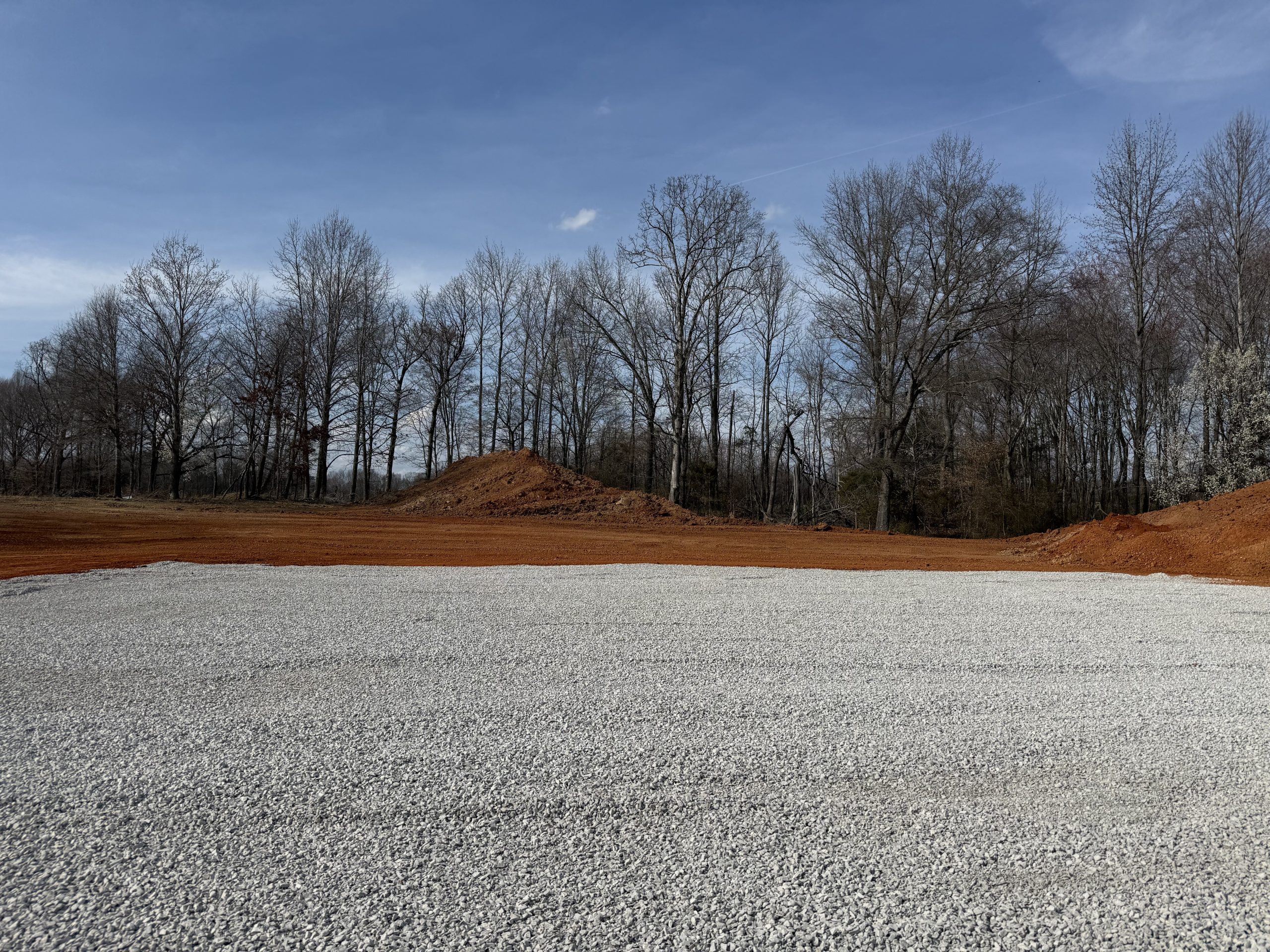
Warren County does not hand you a flat lot. Most McMinnville homesites sit on ridge and hollow ground, which means half your pad is cut out of the hill and the other half is fill you brought up to meet it. That line where the two halves join is where a house either sits still for fifty years or does not, and it is decided long before anybody pours concrete.
Then there is what the dozer finds. This is karst country. Limestone runs shallow, sinkholes show up where the map says pasture, and a shelf you did not plan for changes the shape of a day. We walk your lot first, tell you what we expect, and write how rock gets handled into the scope up front so nothing lands on your bill without a conversation.
A lot of ground around here grew nursery stock before it grew houses. That leaves root mats, tilled topsoil too soft to carry weight, and irrigation line somebody buried decades ago and never mapped. All of it comes out of the pad footprint before structural fill goes in. Ready to move? Call (931) 636-7713 or send a note.
What We Do Before Your Foundation Crew Shows Up
Pad Building
Cut the hill, build the fill, hold the elevation your builder asked for, and crown it so water leaves on every side instead of sitting against a wall.
Compaction
Fill goes down in lifts and gets packed as it goes. The cut half and the fill half have to behave the same under a slab, and only compaction gets them there.
Rock
Shallow limestone is normal here. We call it when we hit it, show you what we are into, and work off terms we agreed on before the machine ever started.
Trenching
Water, power, and septic runs dug to the depths and stub points on the plan, sequenced so no crew has to open ground somebody else already closed.
Driveways
Most lots put the house uphill from the road. We bench the climb, keep the grade sane for a concrete truck, and ditch the high side so the gravel stays put.
Erosion
Silt fence, check dams, and a diversion above the pad go in early. Pairs with land clearing and grading as one scope.
Cut and Fill Honesty, Start to Handoff
Every pad on sloped ground is a balance question. Take too little off the high side and you are hauling in fill you did not need to buy. Take too much and you have a cut wall that wants to shed water into your foundation. We shoot the lot, work out where the balance point actually is, and set the pad there instead of wherever the flattest corner happens to be. On a Warren County ridge that decision is worth more than any single piece of equipment on the job.
Once the elevation is set, the fill goes in the way fill is supposed to go in. Lifts, packed, checked, then the next one. It is slow and nobody ever sees it again. Skip it and the fill side of the pad settles away from the cut side, and the crack that opens under the slab two winters later cannot be reached without tearing something out. That is the part of site prep worth paying for, and it is also the part easiest to shortcut when a schedule gets tight.
Utilities and drainage come off the plan, not off a guess. We run the trenching for water, power, and septic to the depths and stub locations your builder marked, and on county land we work around the approved perc layout rather than fighting it, because that layout often decides where the house and the drive can even sit. Down toward the Barren Fork we check mapped flood elevation before setting a pad height, since that number quietly drives how much fill the job needs.
The last thing that goes in is usually the first thing that matters: erosion control. Bare dirt on a McMinnville slope moves the first hard rain, so silt fence and a diversion ditch above the pad go in early rather than after somebody complains. Then we hand off. You can see finished work in the project gallery, and if you want the whole run from standing timber to build-ready, clearing and grading stay under the same contract and the same operator. One number, one man accountable, thirty minutes from the shop in Manchester.
Questions We Get On Warren County Lots
If your question is not here, ask the man who will be running the machine. Reach dispatch and get a real price from the owner.
What does site prep cover on a McMinnville homesite?
We build the pad, move the dirt to make it level, compact the fill in lifts, cut the driveway bench, trench for water, power, and septic, and set the erosion control before the foundation crew arrives. On Warren County ground it usually also means dealing with rock and shaping the site so water leaves it.
What happens if you hit rock building my pad?
We stop and show you. Limestone sits close to the surface across much of Warren County, so we walk the site and tell you what we expect before we start, then we write a rock clause into the scope so you know how rock gets handled and billed if we find it. You will never get a surprise line item without a conversation first.
Can you build on old nursery ground?
Yes, and it is common work around McMinnville. Former growing fields carry root mats, tilled topsoil that will not hold a structure, and irrigation line buried decades ago. We strip the organics out of the pad footprint, locate what we can before the bucket finds it, and bring in structural fill so the pad sits on something that supports weight.
Why does compaction matter so much on ridge and hollow ground?
A pad on sloped ground is part cut and part fill, and the fill half is the half that moves. We compact in lifts as we build so both halves settle the same. Skip it and the fill side drops away from the cut side under the slab, and the crack shows up two winters later where nobody can reach it.
Do you coordinate with the septic perc and the builder?
Yes. On county land the perc site often decides where the house and the driveway can go, so we work off the approved layout rather than around it. We coordinate pad grade, utility stub locations, and access with your builder so the foundation crew is never standing around waiting on dirt.
Can you get a driveway up to a pad on a steep lot?
Usually yes. Plenty of McMinnville lots put the buildable spot uphill from the road. We bench the drive into the slope, keep the grade walkable for a concrete truck and a moving van, and ditch the uphill side so runoff does not run down the travel lane and take the gravel with it.
What about erosion control and the Barren Fork floodplain?
Bare dirt on a slope moves the first hard rain, so silt fence, check dams, and a diversion above the pad go in early rather than after an inspector asks. On low ground near the Barren Fork we check the mapped flood elevation before we set a pad height, because that number decides the fill quantity.
Walk Your Lot With The Owner
Thirty minutes from the shop in Manchester. We look at the slope, the rock, and where the water wants to go, then you get a real price from the owner. Veteran owned, no dispatcher in between.