Hillsboro Forestry Mulching
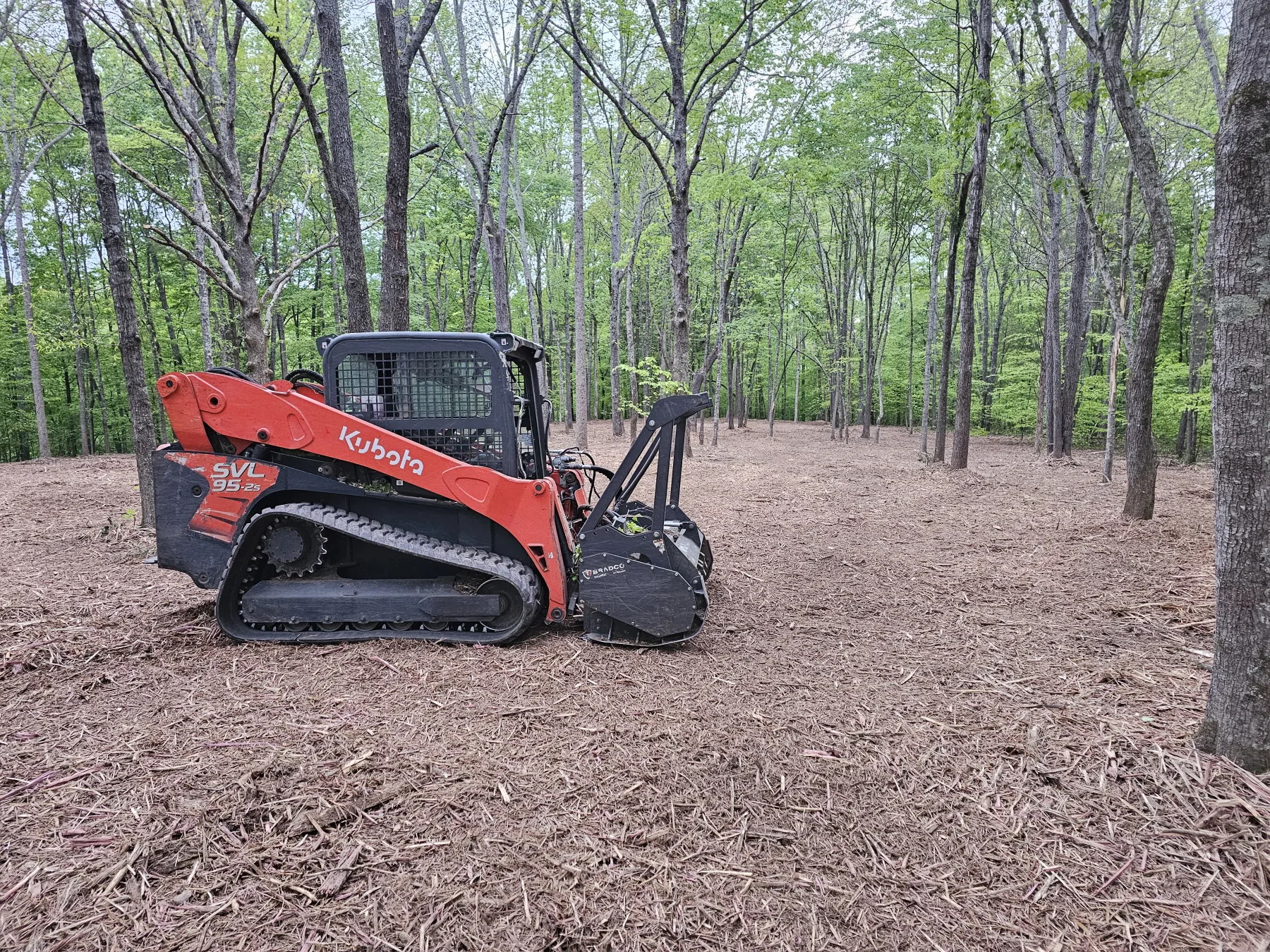
Standing brush and small timber ground where it stands, turned into a mulch mat that stays on your ground. Nothing stacked. Nothing hauled off. Nothing burned.
Why Owners Out Here Stop Fighting the Brush by Hand
Land around Hillsboro tends to sit for a while. A place gets passed down, or bought as a future homesite, or kept as hunting ground, and the fields quietly close in from the edges. Give it five or six seasons without a mower and the pasture is cedar, the fence line is briar, and the back half is a wall you cannot walk through, let alone drive.
Forestry mulching is the answer to that specific problem. One machine goes in, grinds the standing brush and the small trees down where they stand, and spits them out as chips. There is no pile. Nobody is stacking limbs by hand, nobody is waiting on a dry day and a burn permit, and no dump truck is running loads off your property. What comes down stays down, flat, on the ground.
That matters more here than it would on a flat suburban lot. Coffee County ground rolls, and this side of the Highland Rim carries a lot of thin soil over rock. Scrape that with a dozer blade and you have moved the good dirt into a windrow along with everything else. Grinding in place leaves the soil profile intact and puts a blanket over it on the way out.
We run out of Manchester, so Hillsboro is a short pull down the road rather than a mobilization charge from another county. The owner runs the machine. When you call (931) 636-7713, you are talking to the man who will be sitting in the cab.
What a Day on Your Place Looks Like
Walk It Together
We put boots on the property, look at what is standing, find the gate the machine can actually fit through, and mark the trees you want left alone. You get a number before anything runs.
Open the Edges
Work starts where you can already reach, usually a drive, a field edge, or a fence line, and pushes inward. That gives the machine room to turn and gives you a visible line to judge the rest against.
Grind and Spread
The head takes stems down at the ground and throws the chips behind it. The mat builds as we go. Thick spots get a second pass if you want a finished look instead of a knockdown.
Look at It Before We Load Up
You walk the finished ground with the operator while the machine is still there. If a corner needs another lick, that is the moment to say so, not a week later over the phone.
If Dirt Work Follows
Clearing is often step one. We also handle land clearing, grading, and site prep in sequence, same outfit, no second crew to schedule.
Knockdown or Finished, and How Big Is Too Big
Two questions decide most of what a mulching job costs and how it turns out. The first is how clean you want it. A single knockdown pass drops everything and leaves a coarse mat with visible chunks in it. That is plenty if you are opening sightlines for deer, reclaiming a fence line, or getting a look at ground you have not seen in years. A finished job means going back over the same ground until the mat is even and you could run a mower across it. It takes longer, and it is worth it on the acre near the house and rarely worth it on the back forty.
The head does not care how tall a stem is. It cares how thick it is at the bottom.
The second question is stem size. Around a foot at the stump is the honest working limit, and it shifts by species. Cedar is dense and slow. Sweetgum and poplar that same size go through fast. Past that ceiling the tree gets dropped first and worked in sections, which we will point out at the walk so it is not a surprise on the invoice. Anything you genuinely want to keep, a shade tree over the house site, a hickory row along the drive, a den tree in the corner, gets ribboned and left standing. That is normal work, not a special request.
Ground condition is the last variable and the one that moves schedules. A track machine on saturated Coffee County clay leaves ruts, and ruts on ground you intend to bush hog later are your problem long after we are gone. Late fall through early spring is generally the better window: leaves are down, the stems are visible, and the dirt is firm. If a wet spot is holding water we work the dry ground and come back for it.
For the rest of the dirt work around town, see land clearing in the Hillsboro area, grading and final yard work, homesite preparation, and demolition and teardowns, or start at the Hillsboro service area page.
Questions Landowners Ask Us First
The short answers. Send us the details on your property for anything specific to your ground.
Do I have to take every tree out, or can you leave the ones I want?
You mark what stays and we work around it. The operator sees every stem before it goes through the head, so keeping a shade hardwood, a row of hickories along the drive, or a den tree back in the corner is a normal request. Walk the ground with us and flag them with ribbon. It costs nothing extra and it is a lot easier than trying to grow one back.
How big can a tree get before the head will not take it?
The practical ceiling is somewhere around a foot at the stump, and it moves with the species. A soft-wooded sweetgum that size goes down quicker than a cedar half as thick. Anything past that gets dropped first and then run through in pieces, which is slower but still cheaper than bringing in a separate removal crew. We tell you which trees fall in that category at the walk.
What does the mulch mat actually do for me after you leave?
It shields the dirt. Rain hits chips instead of bare ground, so the topsoil stays where it is instead of running to the low side of the property. It also shades out a lot of the seed that would otherwise sprout in open ground, and it breaks down into the soil over the following seasons. On a lot you plan to seed later, that mat is doing free work for you the whole time.
Will the machine tear up my ground if it has been raining?
It can, which is why we watch the forecast and the soil instead of just the calendar. Saturated ground on a track machine means ruts, and ruts on a property you intend to mow are a problem you inherit. If a spot is holding water we work the dry ground first and come back. Pushing a wet job to stay on schedule is how a clearing job turns into a repair job.
Can you clean up a fence line without wrecking the fence?
That is one of the jobs the machine is best at. A line that has not been cut in years fills with cedar, briar, and privet until you cannot see the wire. We run parallel to it and grind the growth back off the posts rather than pushing into them the way a dozer blade would. You get a clean line the same day with nothing stacked up to burn.
Get the Brush Off Your Hillsboro Acreage
Tell us roughly how many acres and how thick it is and we will come look at it. You get a real price from the owner, not a number from somebody who has never run the head. Veteran-owned, Coffee County and the rest of Middle Tennessee.
See Ground We Have Already Cleared
Before and after shots from mulching, clearing, and dirt work across Coffee County and the surrounding area.