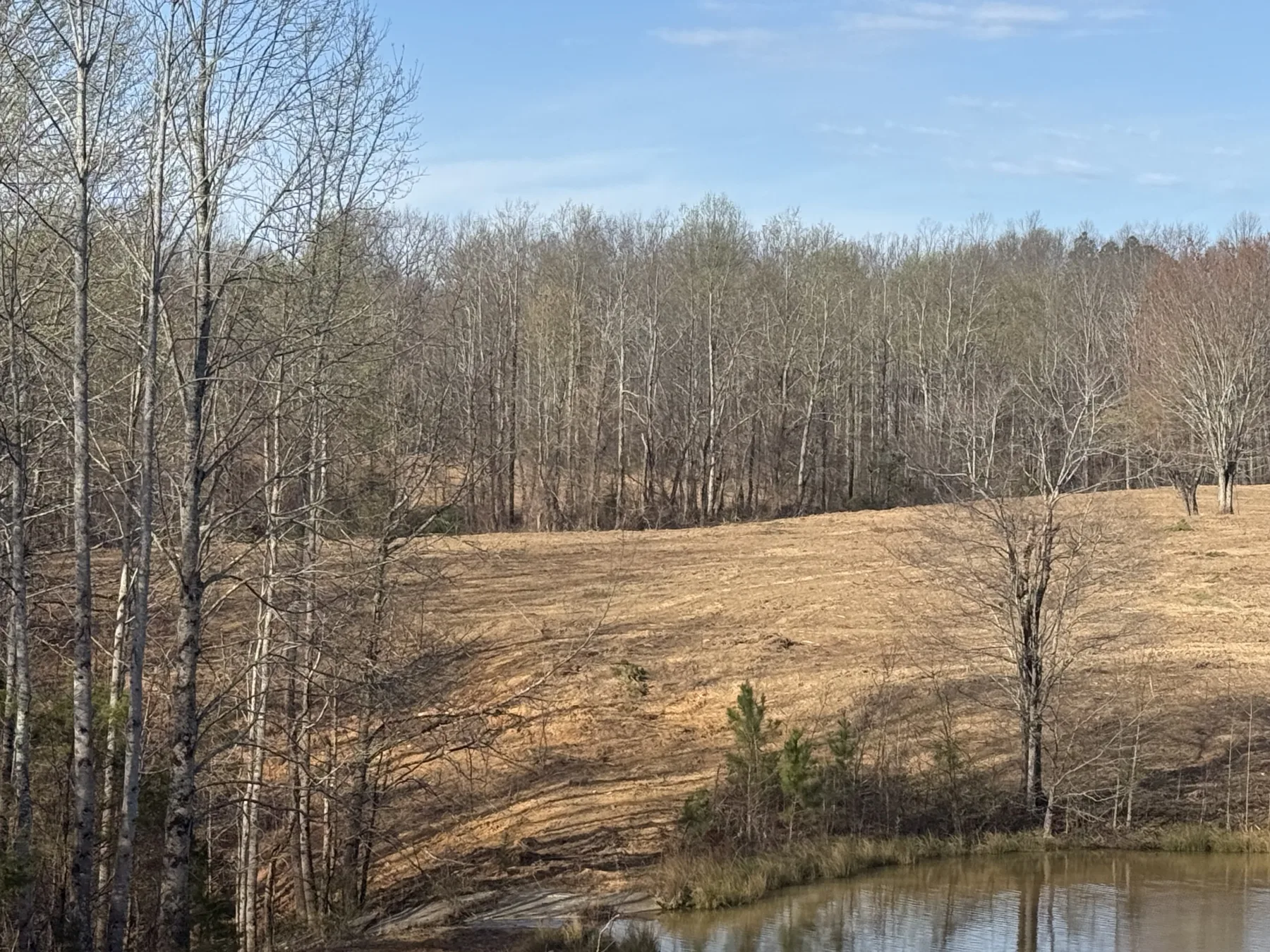
A wet yard is almost never a gutter problem or a soil problem. It is a shape problem. Water goes downhill and stops where downhill stops, and if you can find that spot on your own property you already understand your drainage better than most people do.
Here is something worth doing that costs nothing. The next time a real storm comes through, put on boots and go outside while it is still raining hard. Not afterward, during. Walk your property and watch what the water is doing. Where it is moving, how fast, which direction, where it slows down, where it pools, where it disappears. Twenty minutes of that will teach you more about your own ground than any amount of standing in the yard on a dry Tuesday wondering why the same corner is always soft.
Water Is Simpler Than People Make It
Every drainage problem anybody has ever had comes down to the same two facts. Water moves downhill, and it keeps moving until the downhill runs out. That is the entire mechanism. When a yard holds water, it is because the surface it is sitting on has no continuous fall leading somewhere else. It is in a bowl, and a bowl does not care how much rock or how many pipes you put in it.
This is why the usual first attempts fail. Longer downspout extensions move the discharge point twelve feet and then hand the water back to the same flat ground. A trench full of gravel gives water somewhere to sit that is more expensive than dirt. A load of topsoil dumped in the low spot raises it until it settles back. None of those address the shape, and the shape is the problem.
Walking Your Own Property Like a Grade Guy
Start at the Wet Spot and Go Uphill
The instinct is to look at the puddle. The useful move is to turn around and trace backward from it, following the path the water took to arrive. Somewhere along that path is the place where the ground quit falling. That location, not the puddle, is where the fix belongs. People spend money at the symptom constantly and are then surprised that it comes back.
Find the Outlet Before You Plan Anything
This is the step that gets skipped and it is the one that matters most. Water you move has to go somewhere legitimate. On a rural property that is usually a road ditch, a natural draw crossing the back, a creek, or a low corner that already drains on its own. Until you know where the destination is, every plan is guesswork, because a swale that carries water into a spot with no exit has just relocated the puddle onto different ground.
The Places It Goes Wrong Around Here
Properties around Hillsboro tend toward the larger side with long drives and real relief across them, so the failure patterns are different from a subdivision lot.
The most common one is ground that runs the wrong way in the first eight or ten feet around a house. Sometimes that is how it was left when the place was built. More often it happened slowly: backfill settling over years, mulch and topsoil built up along a foundation season after season until the ground beside the wall is higher than the ground twelve feet out. Nobody notices it happening and then there is water in a crawl space.
The second is a drive that has lost its shape. A gravel drive is supposed to be arched across so rain sheds off both edges. Traffic flattens that arch over time, and once it goes flat the drive becomes a shallow channel carrying water along its length instead of shedding it. Then it holds water where it is flattest, and the soft spots begin.
The third is the road ditch and the culvert at the entrance. A ditch that has silted in or grown over stops carrying, and when it stops carrying it backs up behind whatever crosses it. A pipe set too high does the same thing. Both are easy to see if you go stand there during a hard rain and much harder to diagnose from the house.
Why Clay Makes All of This Less Forgiving
Middle Tennessee clay is why a marginal grade that would be tolerable somewhere sandy becomes a real complaint here. Water does not soak through clay at any useful rate. On sandy ground, a mild low spot drains downward and dries out on its own within a day. On clay, that same low spot has to shed sideways or it holds until it evaporates, which after a wet stretch can take a week.
Clay also gets a lot of blame it does not deserve. The soil type is not the problem. It only means the surface has to do all the work, so the surface has to actually be right. On a property with proper fall to a real outlet, clay drains fine, because the water never needs to go down. It just needs to leave.
The seasonal side is worth knowing too. Wet clay will not compact and it holds every track a machine puts in it, so there is a window when this work goes well and a window when pushing it makes a mess you inherit. Sometimes the right answer to a drainage call in a soaking February is to come look now, plan it properly, and do the work when the ground will take it.
What to Have Ready When You Call
Photographs taken during a storm are the single most useful thing you can hand a contractor. Not after, during, while the water is visibly moving. A picture of standing water tells us where it stopped. A picture of running water tells us where it came from, and that is the half nobody usually has.
Beyond that: how long the water stays after rain quits, whether it has always done this or started at some point, what has changed on the property or upstream of it, and where you believe the water is supposed to end up. That last one is often the most valuable thing an owner knows, because you have watched this land for years and we are seeing it for an hour.
The detail on the dirt-moving side lives on the grading and drainage page for this area. If the wet ground is where a building is going rather than a yard you already have, site preparation around Hillsboro covers how drainage gets built into a pad from the start. Either way, you get a real price from the owner after somebody has stood on the ground.
Drainage Questions From Around Here
Will French drains fix my wet yard?
Sometimes, as part of a plan, and they get installed far more often than they are the right answer. A buried line still needs somewhere downhill to discharge, so if the shape of the ground has no fall, the pipe fills and sits. Fix the surface first. If a subsurface line is still worth adding after that, it will work far better on ground that already drains.
Can I just add topsoil to the low spot?
It buys a season and then the fill settles and you are back where you started, usually with the low spot slightly worse because the surrounding grade never changed. The exception is a genuinely small dip on ground that otherwise falls correctly. Anything bigger needs the grade reshaped, not filled.
How much fall does a yard actually need?
Less than most people picture, and it has to be continuous, which is the part that gets missed. A gentle steady grade away from a structure works fine. A steeper grade with one flat section in the middle does not, because the flat section stops everything. Consistency matters more than steepness.
Can water be sent onto the property next door?
Concentrating runoff and discharging it onto a neighbor is a good way to end up in a dispute, and it is not how we plan work. Water goes to a legitimate outlet: a road ditch, a natural draw, a creek, somewhere it was already headed. That destination gets identified during the walk, before anything is designed around it.
When is the best time of year to do this work?
When the ground is firm enough to shape and compact, which around here generally means late summer through early winter. Working saturated clay produces ruts and a grade that settles out of shape within the year. If the problem is urgent we will look at it any time, and sometimes the right call is to plan it now and run the machine when conditions cooperate.
Something on Your Place Staying Wet?
Send us photos taken while it is raining if you have them, and tell us how long the water hangs around. We will come walk it, find where the fall quits, and tell you what it takes. Veteran-owned, working Coffee County every week.
Get a Free Price Call Now: (931) 636-7713